

In 2020, the COVID-19 pandemic changed daily life around the world.
Businesses temporarily closed, events were cancelled and many sports teams had to stop training together. Cheerleading was no exception. Gyms closed, team practices were suspended and competitions were postponed or cancelled.
Cheerleaders suddenly found themselves unable to stunt, tumble or train alongside their teammates.
So, how could they stay active, maintain their skills and remain connected while practising from home?
Our coaches put on their thinking caps and introduced a new solution: CA Virtual Training!
What Was Virtual Training?
Virtual training allowed cheerleaders to continue practising through video conferencing platforms from the safety of their own homes.
At the scheduled time, athletes changed into their practice wear, prepared a safe training space and joined their teammates online.
Although we could not recreate every part of a physical cheerleading class, our coaches adapted the training programme to include activities that could be performed safely at home.
A typical CA Virtual Training session included:
- Warm-ups and stretching
- Strength and conditioning exercises
- Stunt technique drills
- Tumbling drills
- Jump training
- Dance choreography
- Solo cheer routines
- Team games and challenges
- Team-bonding activities
Cheerleading gyms around the world also introduced similar programmes during this period, finding creative ways to keep their athletes active and connected.
Making Conditioning More Fun
Conditioning is an important part of cheerleading, but it can feel especially challenging when athletes are training alone at home.
Our coaches added games and surprises to make each session more enjoyable.
During one activity, cheerleaders took turns spinning a virtual wheel filled with different conditioning exercises. Wherever the pointer landed, everyone completed that exercise together.
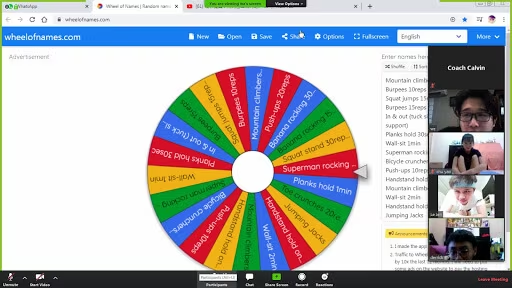
Nobody knew what was coming next, which turned an ordinary conditioning session into a fun team challenge.
We also adapted familiar cheerleading games so they could be played online.
One example was “Ships and Sailors”. The usual commands and actions were modified so that everyone could join in, even though they were participating from separate homes.
Stunt Training Without a Stunt Group
Social distancing meant that cheerleaders could not physically stunt with one another.
However, they could still work on important techniques.
Our coaches introduced individual drills that helped athletes practise their hand positions, timing and body control. Cheerleaders could even use a shoe to represent a flyer’s foot while practising their grip and stunt movements.
These drills could not replace training with a real stunt group, but they helped athletes remember the correct techniques until physical classes could safely resume.
Safe Tumbling Drills at Home
Safety was especially important during virtual tumbling training.
Without coaches physically present to spot athletes, cheerleaders were not asked to attempt advanced or risky tumbling skills at home.
Instead, our coaches broke tumbling down into smaller technique drills.
Using simple spaces and equipment, such as a clear wall, athletes worked on:
- Body shapes
- Hand placement
- Core strength
- Balance
- Shoulder strength
- Straight-leg and pointed-toe positions
Focusing on these smaller details helped cheerleaders improve the foundations needed for more advanced tumbling.
Keeping Jumps Sky-High
Virtual training was also a great opportunity to work on jump strength and flexibility.
Cheerleaders practised conditioning exercises for their legs, hips and core, helping them maintain their jump technique while away from the gym.
The goal was simple: when physical classes resumed, their jumps would still be strong, sharp and sky-high!
Dances and Solo Routines
Training at home did not mean cheerleaders had to miss out on performing.
Our coaches taught energetic dance choreography and solo cheer routines that athletes could practise without needing a full team or large space.
Some cheerleaders even performed their completed routines for their families.
These activities gave athletes something exciting to work towards and helped the training sessions pass surprisingly quickly.
Staying Connected as a Team
Virtual training was not only about maintaining physical fitness.
During a period when everyone had to remain apart, staying socially and emotionally connected was equally important.
The final part of each session was often reserved for team bonding. Cheerleaders had time to chat, share their experiences and catch up with one another.
We also used Zoom breakout rooms to place athletes into smaller groups. This gave them a more comfortable space to talk about their feelings, concerns and the latest happenings in their lives.
Even though teammates could not meet in person, they could still remind one another that they were not alone.
Creative Team Challenges
Our teams were also given special challenges to complete from home.
For one challenge, cheerleaders created a photo montage containing a heartfelt message of appreciation for the frontliners working throughout the pandemic.
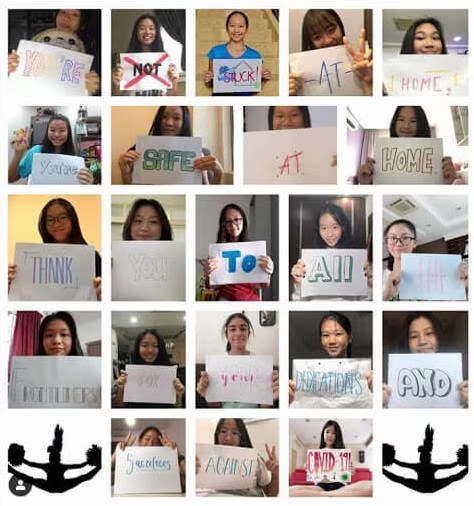
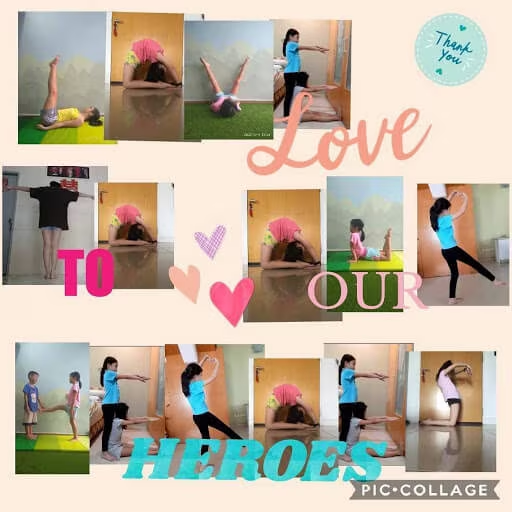
In another challenge, athletes filmed themselves “passing” a bottle of sanitiser from one video clip to another while performing creative cheer movements.
The separate clips were then combined into one team video.
These projects allowed cheerleaders to be creative, contribute to something together and experience a sense of accomplishment despite being physically apart.
Team Lynx from SK Bukit Damansara also completed a fun sanitiser video challenge, which was shared on the Cheer Aspirations Facebook page.
Keeping the Cheer Spirit Alive
Virtual training could never completely replace the experience of practising together in the gym.
Cheerleaders missed stunting with their teammates, performing full routines and celebrating achievements face to face.
However, CA Virtual Training gave our athletes a way to remain active, improve their individual skills and stay connected during an uncertain period.
With creativity, teamwork and a little help from technology, we kept the cheer spirit alive—even from home.

